
Hydraulic Design Affects Overall Performance
Pool buyers often compare visible equipment and assume performance will largely follow the quality of those components. A larger pump, better filter, stronger heater, or premium sanitation package can feel like the foundation of a high-performing pool. Very often they are not, because hydraulic design is often the invisible system deciding whether those components ever reach their intended performance.
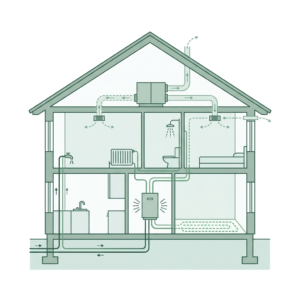
This is not a plumbing detail. It is system architecture. Pipe diameter, routing geometry, suction balance, return resistance, equipment order, and total hydraulic head together determine how hard every component must work just to perform normally. In weak hydraulic systems, equipment may appear undersized when the deeper problem is that the system is quietly taxing everything connected to it.
This is one of the least visible performance failures in pools. The system may not look broken. It may simply operate under permanent resistance. That resistance shows up in familiar complaints: pumps that seem louder than expected, heating costs that feel disproportionate, cleaning systems that never quite perform as promised, filters that appear undersized despite respectable specifications. These often look like product disappointments when they are actually hydraulic penalties.
Head loss is frequently where those penalties accumulate. Every unnecessary restriction, sharp directional change, undersized line, or poorly organized equipment run can increase the resistance water must fight through. Small hydraulic compromises can stack into major operating consequences. A system may appear generously equipped while much of that investment is quietly spent overcoming friction.
In some systems, water may be traveling a modest physical distance while hydraulic resistance makes the pump behave as if it is pushing much farther. Buyers often underestimate how quickly elbows, restrictions, and poor routing accumulate into a hidden dynamic load. That invisible burden can quietly erase efficiency gains buyers thought premium equipment would deliver.
That is why hydraulics often behaves like an invisible energy tax. Buyers may assume a variable-speed pump or larger motor will restore performance, when the deeper issue is often path inefficiency. Stronger force through a resistant path may raise stress before it raises performance. Energy use rises, turbulence rises, wear rises, and the original design flaw remains. That is the power paradox many expensive upgrades run into.
Hydraulic balance matters in the same way. Water must not only move, it must move proportionately. If suction behavior, return energy, and flow demand are poorly balanced, systems often drift into instability that shows up as noise, cavitation risk, air entrainment, chronic inefficiency, or shortened equipment life long before failure becomes obvious.
These are often diagnosed as component defects. They are often symptoms of hydraulic stress.
Another blind spot sits in equipment sequencing. Components do not only need to exist; they need to encounter water in the right order. Sequencing can shape protection, efficiency, maintenance burden, and service life as much as equipment quality itself. Buyers often evaluate components individually while missing that poor sequencing can quietly degrade all of them.
A heater can underperform because hydraulics starve heat transfer. Filtration can disappoint because flow behavior undermines capture conditions. Sanitation can look unstable because circulation architecture disturbs distribution logic. In many pools, what appears to be multiple small equipment frustrations can actually be one hydraulic problem expressing itself through many symptoms.
Hydraulic design also shapes whether circulation merely moves water or actively sweeps contamination toward capture points. In strong systems, flow does not only circulate. It transports debris toward treatment. That distinction often separates clean-looking water from stable water.
That is why hydraulic design often behaves like structural engineering beneath visible equipment choices. It determines whether components cooperate, or compensate. That is a profound difference.
Many upgrades miss this completely. A variable-speed pump is added to a high-resistance system. A larger filter is installed on compromised hydraulics. Automation is layered over flow architecture that was inefficient from the beginning. The system gets more sophisticated without necessarily getting better.
This is where many buyers unknowingly optimize around symptoms while leaving the governing architecture untouched.
The deeper question is whether the hydraulic architecture creates resistance the equipment must constantly overcome, or removes resistance before performance is lost. That difference often decides whether a pool operates expensively or elegantly.
Well-designed hydraulics do not ask pumps, filters, and heaters to work harder.
They allow them to work closer to their natural efficiency.
Strong pool performance often looks effortless not because components are oversized, but because hydraulic penalties were minimized before equipment was asked to solve them.
That is a very different design philosophy. PreciseBuyer treats hydraulic design as performance infrastructure. Because in many pools, efficiency is not limited by the equipment installed, but by the hidden resistance designed around it.