
Rethinking Irrigation Systems
Where Expectations Begin to Break
Before choosing a system or planning installation, it’s critical to understand what irrigation actually does. It doesn’t respond to what looks dry or uneven; it delivers water based on fixed conditions. When those conditions meet, a garden that varies across areas, outcomes begin to diverge. Most issues don’t come from the system itself, but from assuming it works differently than it does.
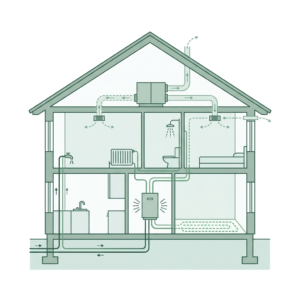
Garden irrigation systems are often approached as simple automation tools that deliver consistent watering once installed. That assumption is misleading. Irrigation does not create uniform results on its own. It operates within constraints defined by water pressure, soil behavior, plant diversity, and how the system is actually used over time.
When this is ignored, early satisfaction creates a false sense of success. Systems that appear to work in the first season begin to show inconsistencies as conditions change. Uneven coverage, pressure drops, clogged lines, and constant adjustments emerge not because the system fails, but because the initial expectations were built on simplified assumptions. Irrigation is not about scheduling water. It is about managing variability that the system cannot eliminate.
Who This Page Is For, And What You’re Actually Deciding
This is not for someone comparing sprinkler heads, but for someone who has started to notice that irrigation systems do not behave as predictably as they are presented. The common mistake is treating the system as a one-time setup rather than an ongoing structure that requires understanding and intervention. When this distinction is missed, early confidence gives way to recurring issues that feel unexpected but are actually built into how these systems operate.
How Irrigation Systems Behave in Real Gardens
Irrigation systems are often expected to deliver even watering automatically, yet real-world usage reveals that consistency depends on conditions rarely accounted for at the decision stage. Pressure variations, zone imbalance, seasonal changes, and component wear reshape performance over time. When these factors are overlooked, systems that function correctly still fail to meet expectations because the environment they operate in was never stable to begin with.
When Irrigation Works, But The Results Still Feel Uneven
Most dissatisfaction does not come from system failure, but from assumptions that were never tested against real conditions. Coverage claims, automation promises, and scheduling logic often rely on ideal scenarios that rarely exist in actual gardens. Over time, small mismatches accumulate into visible problems, shifting the experience from convenience to ongoing management. The system continues to run, but the expectations behind it begin to break.
Where homeowner expectations go wrong
Installing an irrigation system is only the beginning. Its real behavior becomes clearer over time, often after the first demanding conditions.
What is visible sprinkler heads operating does not fully represent how water is actually distributed. Critical details, such as nozzle behavior, remain unnoticed.
Early placement and design decisions may seem minor, but they often have lasting effects on how the system performs.