
Heat Distribution Limits Comfort
A heating system can produce enough energy and still fail to deliver comfort. This often happens when the problem is not generation, but distribution how heat actually reaches occupied spaces.
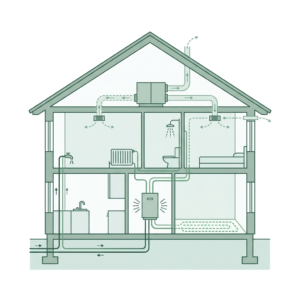
Heat pumps are frequently judged by output, but indoor comfort depends just as much on how that heat is emitted and circulated through the home. A system may be performing as designed while rooms still feel slow to warm, unevenly heated, or less comfortable than expected.
One reason is that low-temperature heating relies on steady heat release rather than high-intensity bursts. That changes not only how a system behaves, but how comfort feels. Traditional systems often create a strong sensation of warmth through very hot radiators and rapid response. Low-temperature systems can maintain the same room temperature while feeling different to occupants, simply because heat is released more gently and less intensely.
That places much greater importance on the surfaces delivering heat into the home. Underfloor heating, properly sized emitters, and well-designed radiators can make lower-temperature systems feel stable and comfortable. Inadequate emitters can make the same system feel weak — not because heat is not being produced, but because it is not entering the living space effectively.
Distribution problems are often subtle and easily misdiagnosed. Some rooms may overperform while others remain cold, not because the heat pump lacks capacity, but because the heat is not moving where it needs to go. Water naturally takes easier paths unless the system is balanced correctly. In that sense, distribution often needs a kind of traffic control, ensuring heat reaches every room rather than returning too quickly through the path of least resistance.
Hidden bottlenecks can also exist in the distribution network itself. Emitter sizing, balancing, pipe constraints, and room-by-room demand can all limit comfort even when system output appears adequate. These are rarely perceived as “heat pump issues,” yet they often determine whether the system feels successful in daily life.
User expectations can add another layer. Many people treat heating as something that should switch off, recover quickly, and deliver comfort on demand. Low-temperature systems are less suited to that pattern. They often work better when maintaining steady conditions rather than repeatedly recovering from setbacks. Trying to use them like conventional systems can make a properly working system feel disappointing.
When indoor comfort falls short, the question may not be whether the heat pump can generate enough heat, but whether the building can distribute that heat effectively and consistently. That distinction is often overlooked, yet it can shape the entire ownership experience.