
Small Restrictions Reduce Performance Over Time
Many buyers assume pressure problems usually come from one major defect, such as weak supply, undersized pumps, or obvious blockages. What often gets missed is that performance losses can emerge from many small restrictions that appear insignificant alone, but begin compounding once they interact across the system.
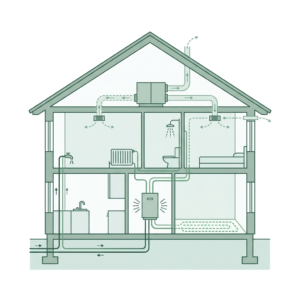
This is where many frustrating water performance problems hide. The issue may not be one dramatic bottleneck, but a series of minor losses distributed through valves, fittings, filters, fixtures, aging pipe interiors, or scaling that gradually erode system behavior.
Small restrictions often matter because hydraulic losses compound rather than merely add. Tiny flow resistances repeated across a system can accumulate into meaningful pressure and flow penalties under real use conditions. Those losses can also grow disproportionately as flow increases. In many hydraulic conditions, higher velocity can increase friction losses much faster than buyers intuitively expect, which is why a system may seem acceptable at modest draw yet deteriorate sharply when demand rises.
That is part of why restrictions often behave less like isolated flaws and more like multipliers. A seemingly minor obstruction can become far more consequential once the system is pushed.
Equivalent pipe length is part of this hidden story. Buyers often think only in terms of visible pipe runs, while fittings, valves, bends, and partially restricted components may effectively add invisible resistance throughout the system. Sometimes the problem is less how far water travels than how difficult the path has become.
This is one reason systems may seem acceptable for years while quietly delivering less performance than when installed. Owners often adapt gradually and may not notice the system has normalized around loss.
Restrictions can also deepen because surfaces age, not only because openings narrow. Pipe roughness, mineral buildup, and corrosion can disturb smoother flow paths and increase turbulence, which can raise resistance without obvious visible blockage. A system may lose performance through surface condition long before users suspect a clog.
This is where many recurring complaints about weak showers, slower fixture fill, or declining system responsiveness often begin. Not from catastrophic failure, but from hidden friction growing system-wide.
Point-of-use restrictions can complicate this further. Aerators, shower flow restrictors, fouled cartridges, and small end-point restrictions can sometimes become the last bottleneck that undermines improvements elsewhere. In some homes the problem is not the main line, but the final few centimeters of the system.
A common buyer mistake is treating maintenance issues and system design issues as separate problems. In practice, accumulated restrictions can blur that line because they slowly change how the whole system behaves. What looks like aging may sometimes be compounded resistance masquerading as system decline.
The more revealing question is often not whether there is one major bottleneck, but how many minor restrictions may be quietly compounding together, from pipe geometry to surface roughness to end-use hardware.
In many water systems, performance loss often comes less from one dramatic failure than from resistance accumulating where nobody thought to look.