
How Heat Pumps Behave
Beyond Installation & Specifications
The system may be technically correct. But real-world performance takes shape through how it behaves day after day, season after season, under changing conditions inside your home.
Heat pump decisions are often framed as technical choices, where correct sizing, proper installation, and good equipment are expected to produce predictable results. That assumption ignores how these systems actually unfold in real life. Once installed, a heat pump enters a network of regulations, financial structures, installation decisions, and long-term dependencies that continue shaping outcomes long after the initial purchase.
When this broader context is overlooked, decisions that seem correct at the technical level begin to drift. A system can pass every calculation and still become difficult to approve, expensive to finance, inconsistent to operate, or hard to maintain over time. The issue is not that the system fails, but that the decision was made as if installation were the end point. In reality, installation is where the system’s real behavior begins.
Standards & Regulations: When Operable Isn’t Approvable

A heat pump can be technically correct and still fail in practice because approval is a separate process from performance. Permits, inspections, electrical limits, and local regulations define whether the system is allowed to exist, not whether it can function. When these constraints are treated as secondary, problems appear after installation, when changes are costly and options are limited. The decision is not just about what works, but about what can be approved within a multi-layered institutional framework
Incentives & Financing: When the Decision Shifts
Financial incentives are often perceived as benefits, but they reshape how decisions are made. Instead of evaluating whether the system fits the home, buyers begin optimizing for rebates, deadlines, or monthly payments. This shift changes the reference point from technical suitability to perceived affordability. Over time, hidden costs, variable savings, and financing structures become visible, revealing that incentives do not improve the system itself. They alter the logic of the decision that led to it.
Installation Reality: Running Doesn’t Mean Right
Installation creates the illusion of completion, when in reality it locks in a chain of decisions that define how the system will behave for years. Small choices made during installation—pipe routing, balancing, sensor placement—rarely appear critical at the moment, yet they shape long-term comfort and stability. When these decisions are made without transparency, systems that run from day one can still carry hidden flaws that only surface through daily use and seasonal stress.
Long-Term Ownership: The Cost That Shows Later
The true cost of a heat pump is not visible at purchase, but emerges over time through operation, maintenance, and dependency on service access. Energy bills fluctuate, service delays introduce friction, and system limitations become clearer as real usage replaces initial assumptions. What begins as a one-time decision gradually turns into an ongoing relationship with the system. When this long-term dimension is ignored, early confidence gives way to late-stage regret shaped not by failure, but by accumulated reality.
Where to next
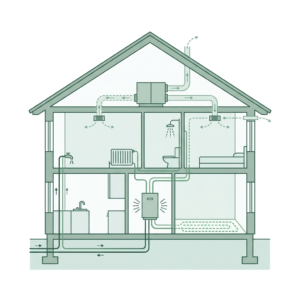
What actually shapes performance
Buying is easy, exiting is not. The purchase process rarely includes discussion about removal, replacement, or system transition. These questions tend to surface later, when the answers are more complex, more limited, and more expensive than expected.
Service access shapes ownership. Lower maintenance does not eliminate dependency. Over time, the ownership experience is influenced not just by the system itself, but by who is available and qualified to maintain or adjust it.