
Expectations Often Don’t Match System Behavior
Many disappointing water pressure decisions begin with an assumption that the system should behave differently than it realistically can. In some cases, what feels like poor performance may reflect a mismatch between expectations and how residential water systems normally behave.
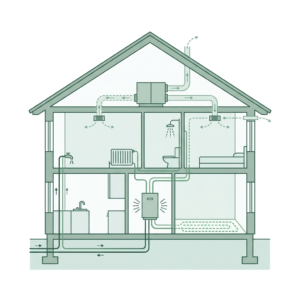
People often expect pressure to remain constant regardless of how many fixtures run, what floor they are on, or how demand changes through the day. Yet residential plumbing is a shared system. When additional demand is introduced, some performance change is often a normal consequence of shared capacity, not necessarily a defect. The more protective question is not whether performance changes at all, but whether those changes remain within a comfortable and reasonable range
Part of the challenge is that people often judge performance against ideal moments rather than normal operating conditions. If pressure feels unusually strong at certain times, that can quietly become the benchmark. Anything less may feel like failure, even when the system may be behaving within ordinary limits.
Expectations are also shaped by comparisons that may not be realistic. Previous homes, unusually high-pressure properties, or even commercial environments can create reference points residential systems were never intended to match. What feels disappointing may sometimes be a comparison problem as much as a plumbing problem.
This matters because unrealistic expectations can drive unnecessary upgrades, oversized solutions, or expensive corrections to systems that may already be functioning as designed. In some cases, trying to force residential systems to behave beyond their intended comfort range can create new problems rather than solve old ones.
That is why a protective decision sometimes begins not by asking how to increase pressure, but by asking what reasonable performance should look like in the first place.
Some pressure problems are real. Some are expectation problems. Confusing the two can lead to costly decisions.