
Low Pressure Is Often a Flow Problem
Many people describe a water problem as “low pressure” when pressure may not be the real issue at all. In many homes, what feels like poor pressure is actually insufficient flow not enough water volume reaching fixtures when and where it is needed.
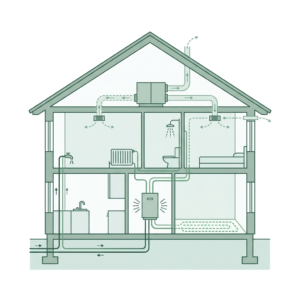
The distinction matters because pressure and flow are not the same thing. Pressure describes force; flow describes delivery. A system may show adequate pressure when no water is moving, yet perform poorly once fixtures are opened and water begins traveling through the system. That difference often surprises homeowners, because what matters in daily use is not static pressure on paper, but how the system behaves under demand.
This is where flow limitations often appear. As water moves through pipes, restrictions consume performance. Pipe size, layout, fittings, filters, and fixture bottlenecks can all limit how much water actually reaches the point of use. In some cases the issue may be as simple as a restricted fixture. In others, the limitation may be embedded in the distribution system itself.
This often shows up during simultaneous use. A shower weakens when another tap opens, an upper-floor fixture disappoints under load, or pressure seems acceptable until several outlets run at once. These are often blamed on low pressure, when they may actually reveal limits in flow capacity.
That misunderstanding can lead to expensive misdiagnosis. People often assume they need a pressure boosting system when the problem may lie elsewhere. But increasing pressure does not necessarily increase usable flow if a bottleneck remains unchanged. In some cases, it can treat the symptom while leaving the real constraint untouched.
This is why “Do I have enough pressure?” can be the wrong first question. A more protective question is: “Can my plumbing system deliver enough water under real usage conditions?” That shift sounds small, but it often changes the diagnosis completely.
Many disappointing water pressure decisions begin not with bad equipment, but with solving the wrong problem. Understanding whether the issue is pressure or flow is often the first real decision.